
Navigation

Where the Coast Kept Watch

Archive photographs, keeper stories, and preserved towers from the northern shore.

Explore the Archive Read Keeper Stories

A visual record of light, weather, and watchkeeping.

The Archive

A Coast Written in Light

Photographs, tools, and recollections trace how work, weather, and daily routines changed along the northern shore.

  • First Fires

    Early coastal lights relied on open flames and vigilant tending, turning remote headlands into essential points of orientation.

  • Lens and Mechanism

    Purpose-built optics and clockwork systems strengthened the beam while changing the rhythm of daily keeper work.

  • Signals in Transition

    Fog signals, improved lamps, and new communications linked isolated stations more closely with ports and rescue networks.

  • Preservation Era

    Automation reduced permanent crews, while communities and conservators began protecting towers, records, and working equipment.

Continue to Keeper Stories
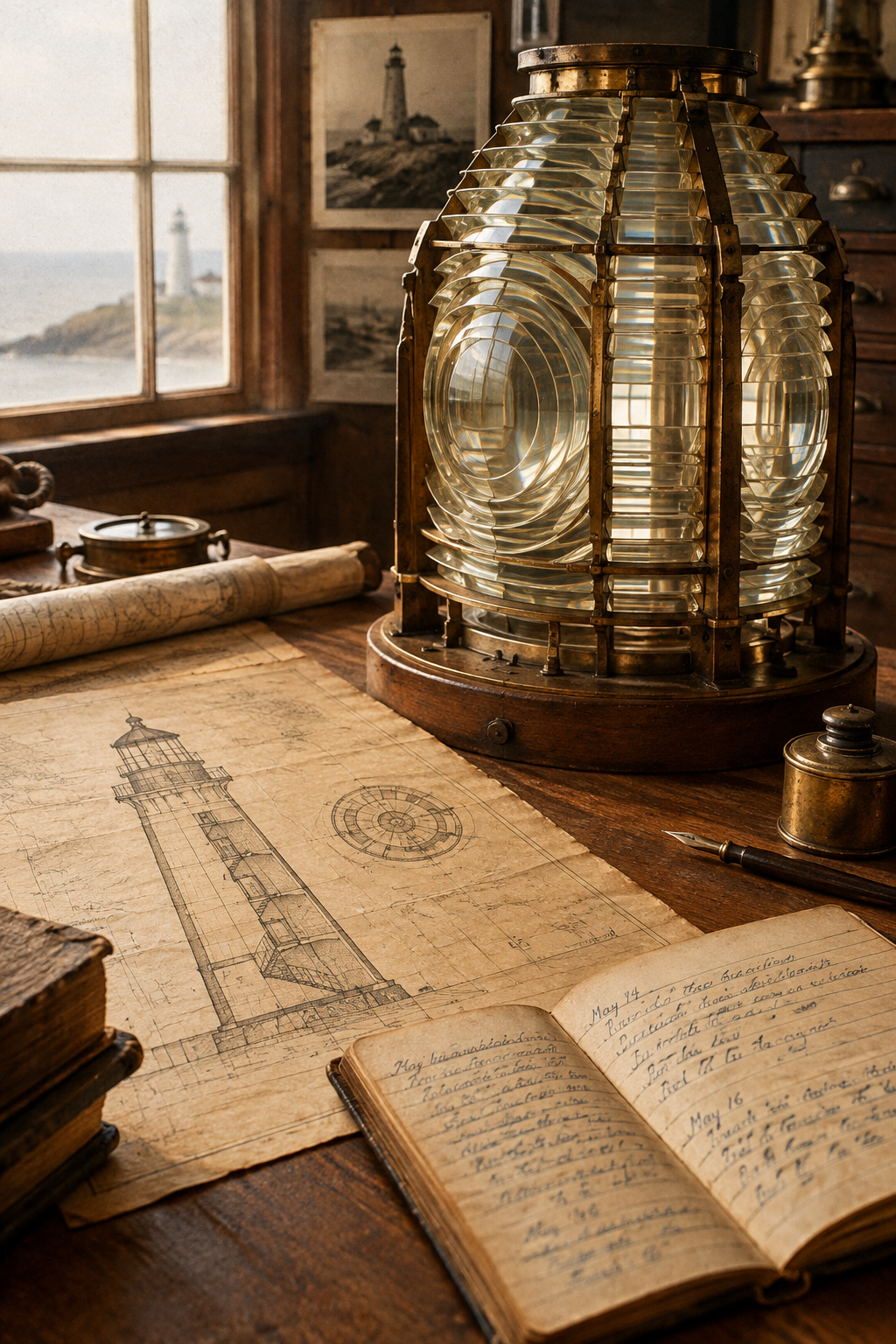
Close archival still life of a Fresnel lens beside weathered lighthouse plans and handwritten log pages.
Optics, plans, and logbooks preserve the work behind the beam.

Keeper Stories

Lives Between Beam and Weather

These representative historical narratives are inspired by common lighthouse duties and station life, not verbatim archival testimony.

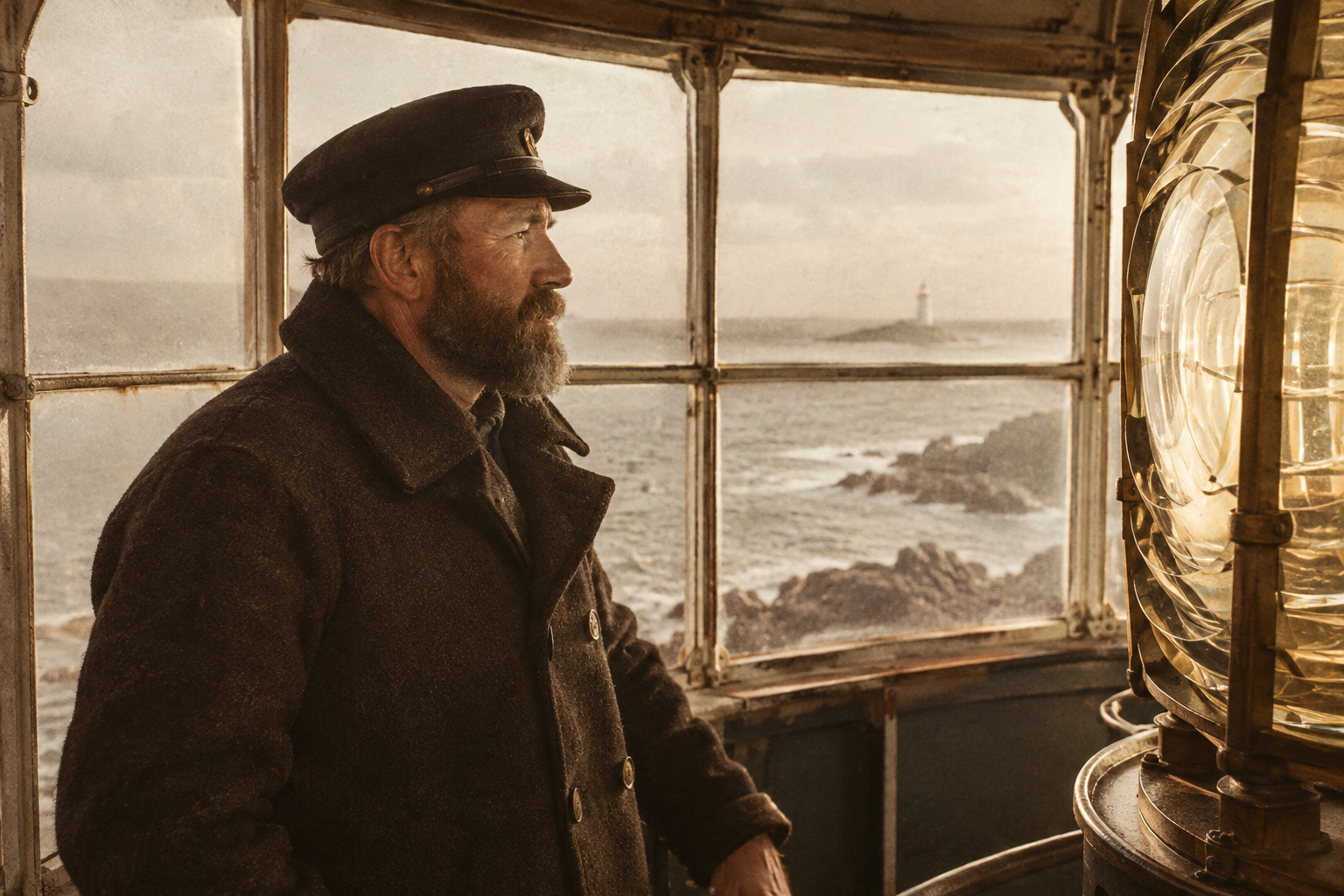
  • A lighthouse keeper in a wool coat inside a lantern room, warm archival portrait, window light and film grain
    Representative archival scene inspired by station records.

    Before automation

    The Night Watch

    A keeper’s shift moved between lamp room, gallery, and logbook—trim the light, read the weather, listen for change beyond the glass.

    Representative voice

    “The smallest sound carried differently when the fog closed in.”

    Framed as representative period language, not a sourced personal quotation.
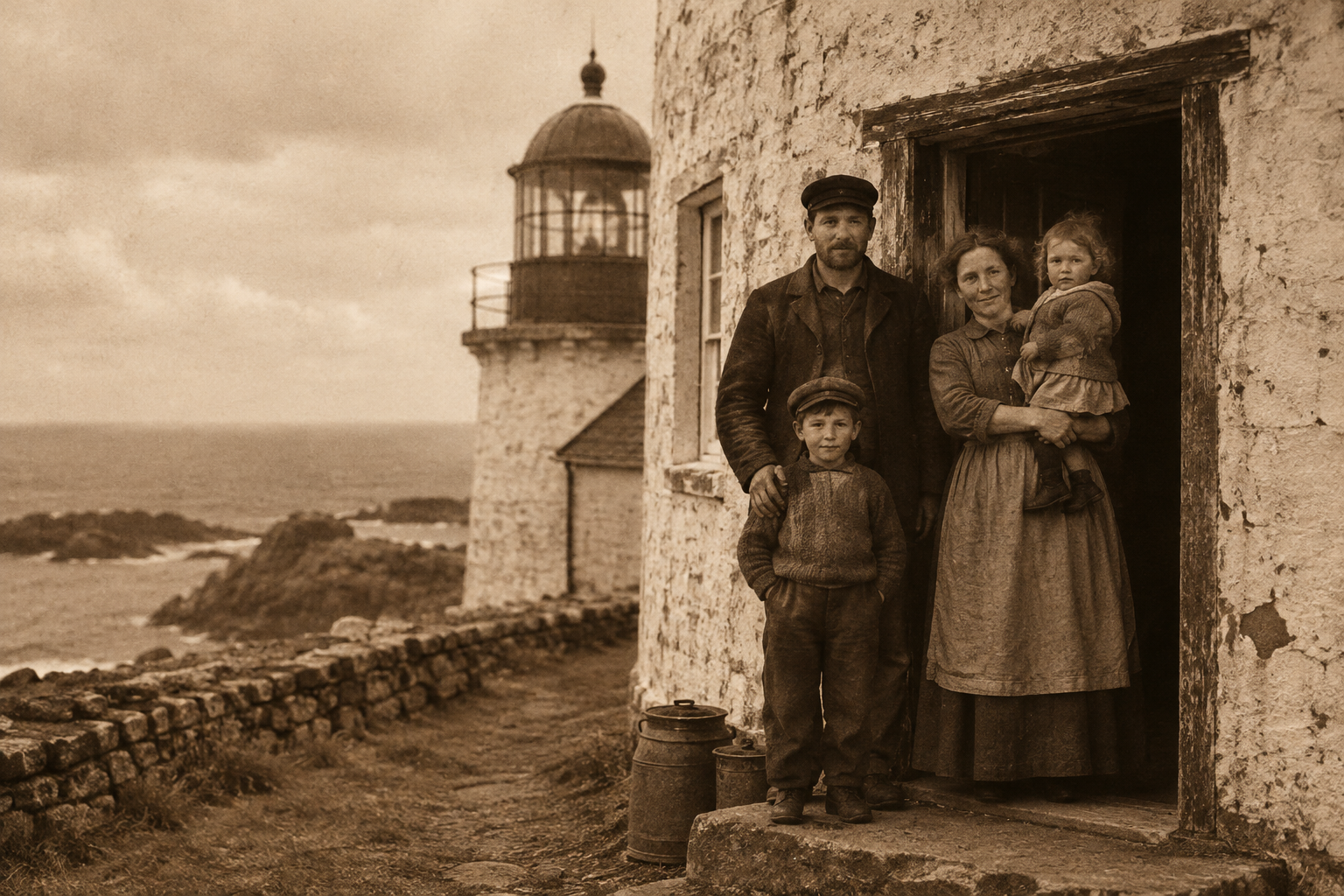
  • Keeper family at a weathered lighthouse doorway, restrained documentary photograph, early twentieth-century mood
    Representative archival scene inspired by station records.

    Life at the tower

    The Family Station

    Remote stations were also homes. Meals, lessons, repairs, and watchkeeping folded into the same rooms while the sea set the day’s pace.

    Representative voice

    “The tower was workplace, schoolroom, and shelter at once.”

    Framed as representative period language, not a sourced personal quotation.
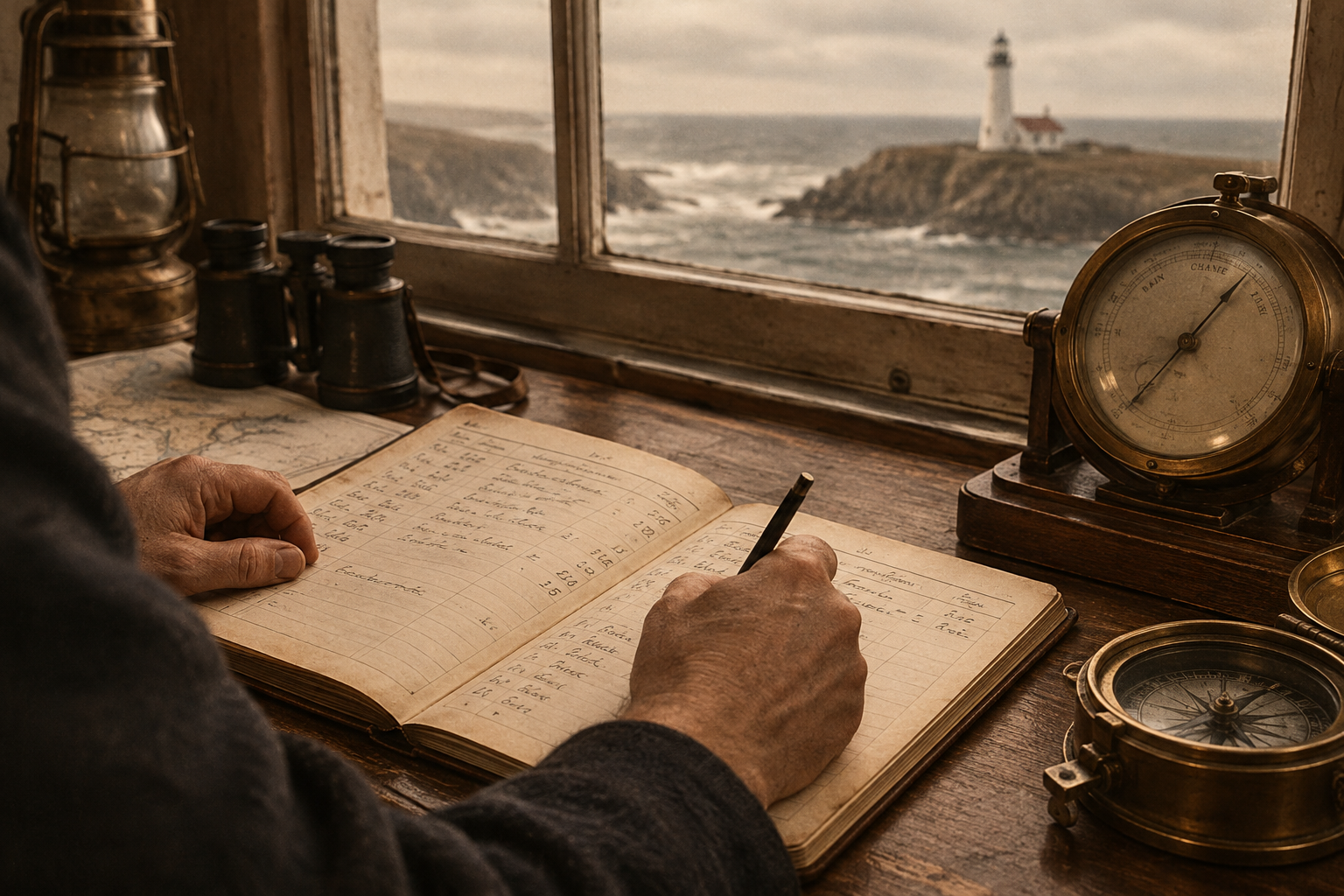
  • Hands recording weather in a lighthouse logbook beside brass instruments, close archival detail
    Representative archival scene inspired by station records.

    Years of transition

    The Last Manual Light

    As machinery and remote systems arrived, keepers became stewards of both old practice and new technology, carrying knowledge across the change.

    Representative voice

    “Automation altered the duty, but not the need to understand the coast.”

    Framed as representative period language, not a sourced personal quotation.
Preserved Towers

A Shoreline of Surviving Lights

This illustrative coastal guide places surviving lighthouse stations in sequence along the northern shore, pairing each marker with its current preservation context.

Northern Coast (illustrative linework)

Locations and entries are illustrative until verified archival coordinates and site records are supplied.

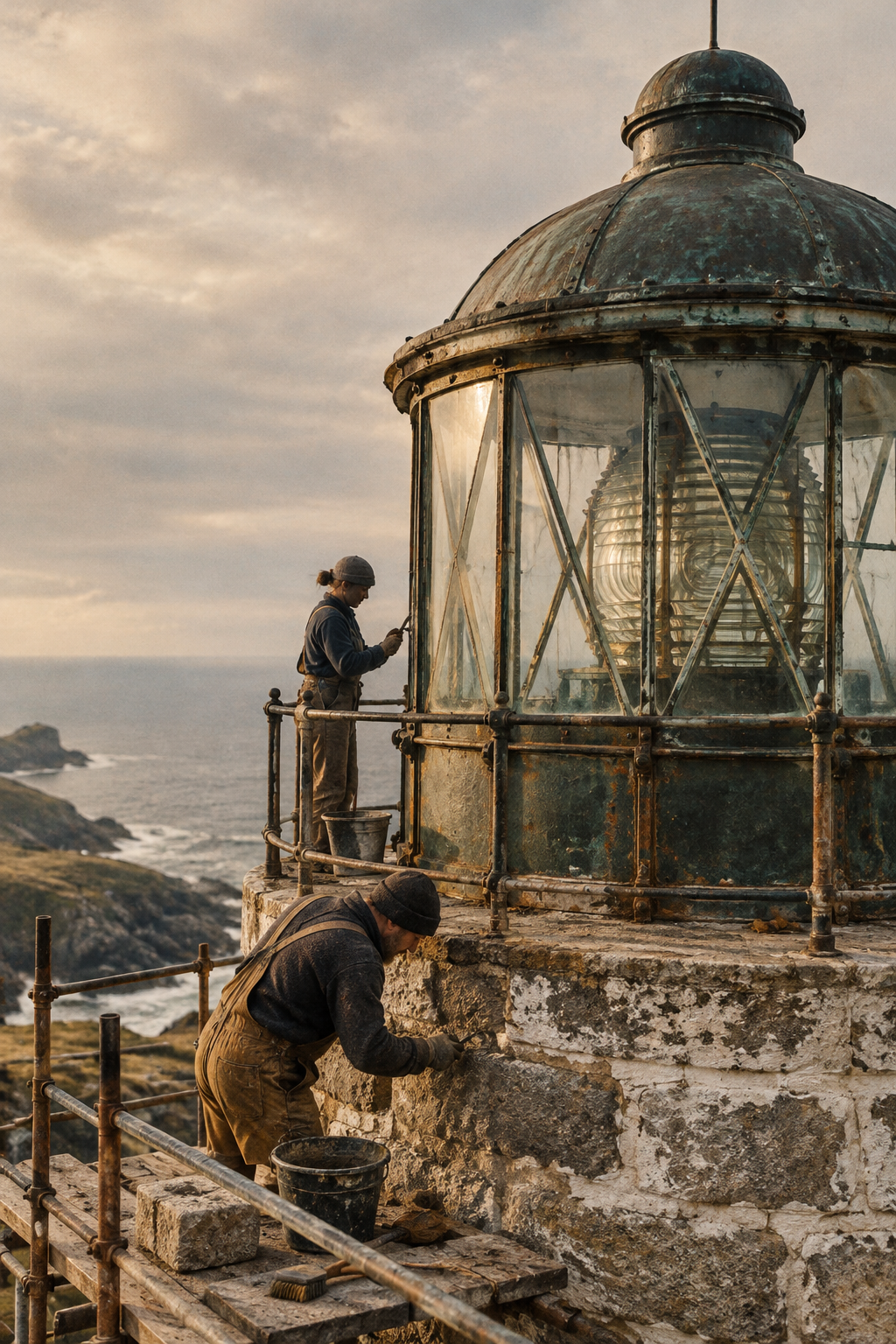
Conservation craftworkers carefully restoring a weathered northern lighthouse lantern frame and salt-worn masonry in warm documentary light

Preservation

Keeping More Than the Tower

Care protects navigation architecture, keeper memory, and working shoreline knowledge so each surviving light remains readable in its full human context.

  • Stone, Metal, Glass

    Preservation begins with the fabric of the tower: masonry, lantern framing, glazing, stairs, and the small fittings that reveal how the station worked.

  • Records and Memory

    Logbooks, plans, photographs, and oral history preserve daily experience that cannot be read from the building alone.

  • Coast and Climate

    Salt, wind, waves, and changing shorelines make lighthouse conservation a continuing practice rather than a finished repair.

Return to Archive